For years, businesses focused on one thing when it came to online visibility: ranking higher on Google.
Find the right keywords, optimize your website, create content, build authority, and hopefully attract more visitors.
That was the basic idea behind Search Engine Optimization (SEO).
But something interesting is happening now.
People are no longer depending entirely on traditional search results. They’re asking ChatGPT for recommendations, comparing products through Google’s AI Mode, and using AI-powered tools to research businesses before making decisions.
And this brings us to a new term: Generative Engine Optimization (GEO).
So, SEO vs GEO: which one should businesses actually focus on?
My answer is both. But understanding how they work together is much more important than simply following another marketing trend.
SEO vs GEO: What’s the Actual Difference?
Let’s start with the basics.
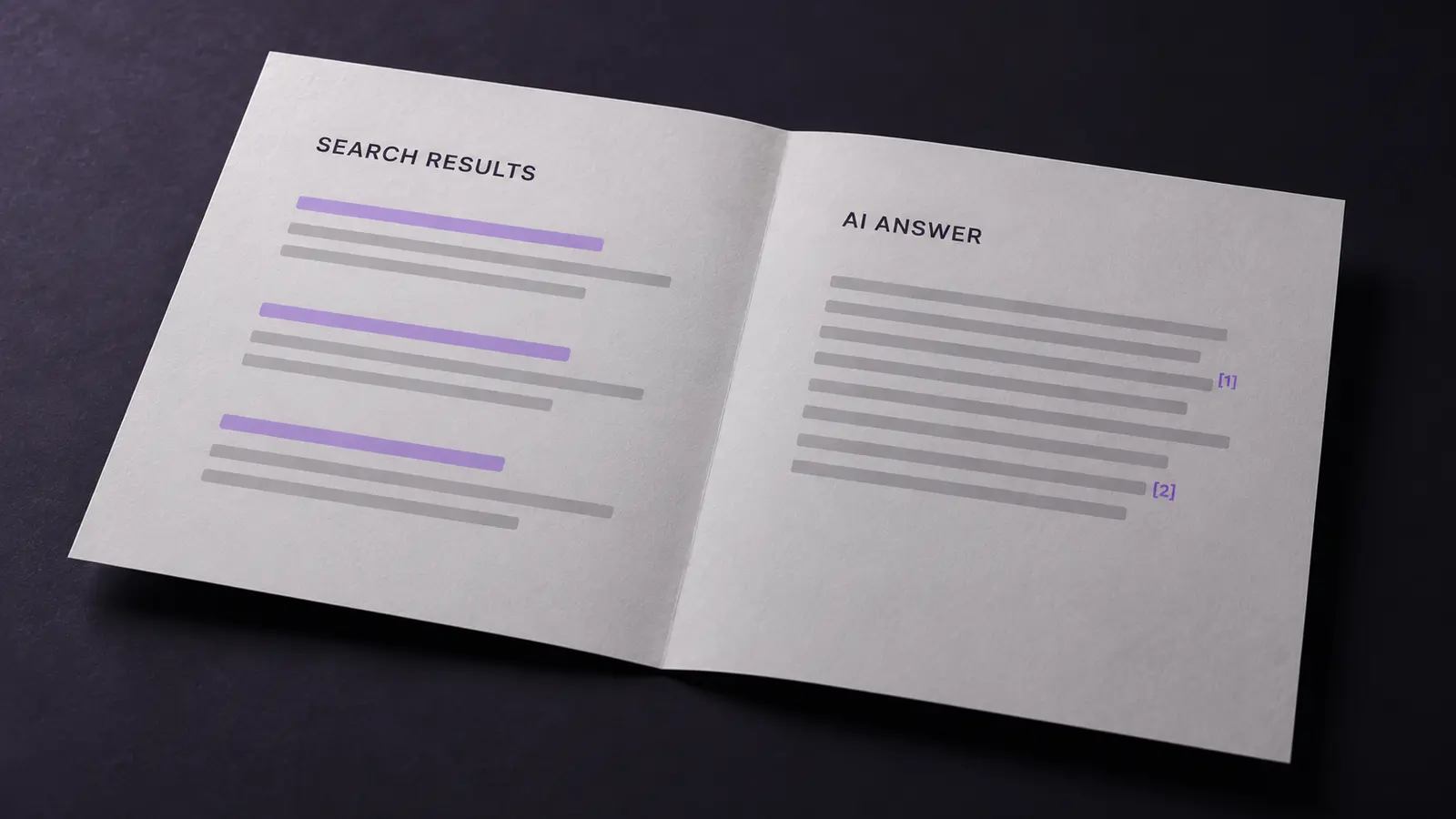
SEO (Search Engine Optimization) focuses on improving your website’s visibility in traditional search engine results.
The objective is to help people discover your pages through relevant searches, ideally bringing qualified visitors to your website.
GEO (Generative Engine Optimization) focuses on improving how your business, website, and content appear in AI-generated answers.
Instead of only competing for a position in search results, you’re also trying to become a useful source that AI systems can reference, cite, or recommend.
Here’s a simple comparison:
| SEO | GEO |
|---|---|
| Focuses on search engine visibility | Focuses on visibility in AI-generated answers |
| Targets organic rankings and clicks | Targets citations, mentions, and recommendations |
| Uses keywords, links, technical SEO, and content | Builds on accessible content, clear information, and credibility |
| Measured through rankings, traffic, and conversions | Measured through AI visibility, citations, referrals, and conversions |
But here’s something businesses should understand.
GEO is not a replacement for SEO.
Google’s own guidance on generative AI search confirms that established SEO practices remain relevant to AI Overviews and AI Mode.
So we’re not necessarily looking at two completely different strategies.
We’re looking at an evolution of how people discover information.
Why SEO vs GEO Matters More in 2026
I previously wrote about why Google is no longer behaving like a traditional search engine.
And honestly, that shift is becoming increasingly important for businesses.
Earlier, someone looking for a CRM platform might search Google for “best CRM software for small businesses.”
They would open different websites, read comparisons, and evaluate their options.
Today, that same person might ask an AI assistant:
“Which CRM is best for a small business with five employees, WhatsApp integration, and a limited budget?”
The AI can generate a comparison and mention relevant products directly.
The business doesn’t necessarily need to receive a website visit to influence that initial decision.
This change also affects traffic.
A 2025 Pew Research Center study found that users clicked traditional search results in 8% of visits where an AI summary appeared, compared with 15% when no AI summary appeared.
That’s an important observation, although it doesn’t mean every website will experience the same decline.
For businesses, the message is simple.
Being discoverable is no longer only about getting the click. It’s also about being part of the answer.
What Businesses Should Optimize for Now
Rather than treating GEO as an entirely new marketing department, I would start by improving the things that already matter.
1. Get Your Technical SEO Fundamentals Right
Before worrying about AI citations, make sure search engines can actually access your website.
Review your:
- Crawling and indexing settings.
- XML sitemaps and canonical URLs.
- Internal links and website structure.
- Mobile experience and loading performance.
- Important content rendered through JavaScript.
Google’s AI search features still depend heavily on its existing search infrastructure.
An inaccessible website doesn’t become more discoverable simply because someone adds AI-related keywords.
I’ve covered these foundations in my technical SEO guide for WordPress websites.
Start there if your website hasn’t had a proper technical review recently.
2. Create Content Around Real Customer Questions
Traditional keyword research is still useful.
But businesses should also pay attention to how people naturally ask questions.
Consider the difference between:
“Project management software”
And:
“Which project management software works best for a small remote team that uses Slack?”
The second question reveals much more about the person’s requirements.
Your content should address those requirements clearly.
Create useful comparisons, detailed service explanations, product documentation, integration guides, and answers to common buying questions.
However, don’t create hundreds of nearly identical pages targeting every possible AI prompt.
Google specifically warns against producing large volumes of repetitive content simply to manipulate search visibility.
Focus on answering real questions properly.
3. Publish Information That Adds Something Original
This is probably the most important part of the SEO vs GEO discussion.
AI is extremely good at summarizing information that already exists.
So why would another generic article explaining the same five tips deserve attention?
Businesses should invest more in:
- Original research and useful observations.
- Real product demonstrations.
- Detailed case studies with verifiable results.
- First-hand explanations and practical examples.
- Technical documentation and troubleshooting guides.
For software companies especially, useful documentation can become a valuable discovery resource.
This is also part of the thinking behind why I’m building Decodability.
The opportunity isn’t simply to create more content.
It’s to make existing knowledge genuinely useful and discoverable.
4. Make Your Business Information Consistent
Imagine asking an AI assistant about a company and finding conflicting descriptions of what it actually offers.
That creates confusion for customers too.
Businesses should clearly communicate their services, products, target audience, location, and contact information.
Maintain accurate information across your website, relevant business profiles, and other legitimate platforms.
Use appropriate structured data, such as Organization, LocalBusiness, or Product, when it accurately represents your content.
For local businesses, keep Google Business Profile information updated.
For e-commerce businesses, accurate product information and Merchant Center feeds can also support discovery.
These practices improve clarity, although they don’t guarantee AI recommendations.
5. Connect Your Content Properly
Publishing helpful articles is only part of the job.
Your website also needs a logical structure connecting related information.
For example, a software company might have separate pages covering features, integrations, pricing, documentation, and comparisons.
Those pages should link naturally where the relationship is useful.
I consider internal linking part of building a website that’s easy to navigate and maintain.
It’s something I also review in my business website launch checklist.
Good information becomes much more useful when people and search engines can find it.
How Do You Measure GEO Performance?
This is where things have become interesting in 2026.
Previously, measuring AI search visibility involved plenty of manual checking and third-party estimates.
Now, search platforms are providing more direct information.
Google introduced a dedicated Generative AI Performance report in Search Console, with worldwide availability announced in August 2026.
It provides impression data for AI Overviews and AI Mode, including information about which pages appear.
Microsoft has also expanded Bing Webmaster Tools’ AI Performance reporting, including citation visibility and insights into topics and user intent.
These are useful developments.
However, I wouldn’t judge an entire GEO strategy only by how many times a brand gets mentioned.
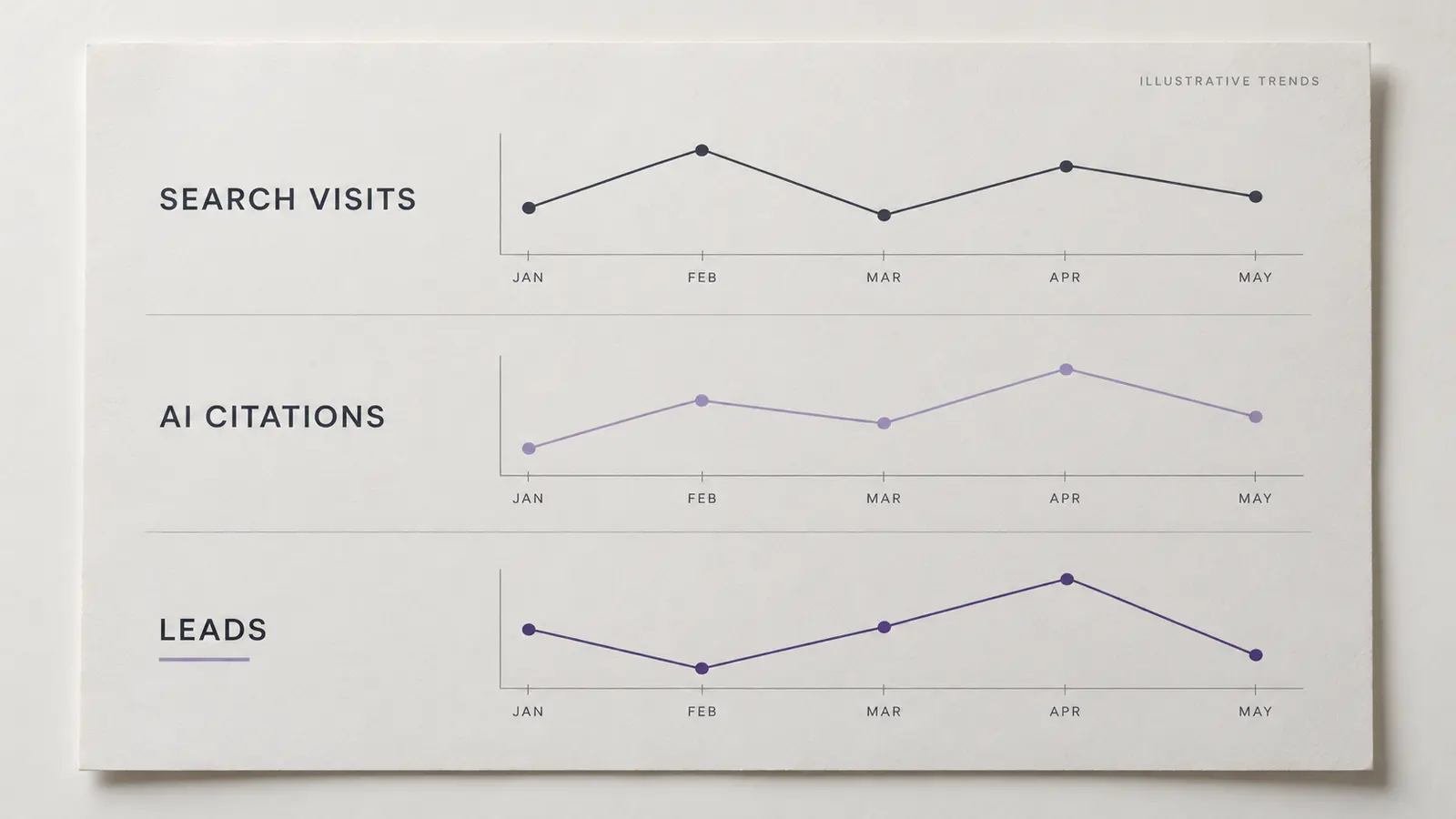
Track organic traffic, qualified leads, branded searches, conversions, AI referrals where identifiable, and citations where reliable data is available.
Because visibility without meaningful business results is still just visibility.
Don’t Fall for Every GEO Shortcut
Whenever a new marketing term becomes popular, new shortcuts appear alongside it.
Some promise guaranteed ChatGPT recommendations.
Others claim that installing special AI files or adding mysterious schema markup will make your website appear everywhere.
Be careful.
Google has explicitly stated that llms.txt files and special AI-specific markup aren’t required for visibility in its generative search features.
It also warns against artificial mentions and unnecessary content restructuring.
That doesn’t mean every emerging GEO technique is useless.
It means businesses should separate supported practices from experiments and marketing claims.
Nobody can guarantee that every AI platform will recommend a particular business.
Should Businesses Prioritize SEO or GEO?
If I were building a business website today, I wouldn’t abandon traditional SEO to chase GEO.
I would establish solid technical SEO, publish useful content, improve credibility, and measure how people discover the business across different platforms.
Then I would expand into AI search visibility based on the audience and the available data.
For a local service business, Google Search and Maps might still generate most enquiries.
For a SaaS company, AI-powered comparisons and product research might create additional discovery opportunities.
Different businesses need different priorities.
The objective isn’t to optimize for every platform.
It’s to be discoverable wherever your potential customers are looking.
Frequently Asked Questions About SEO vs GEO
1. What is the main difference between SEO and GEO?
SEO focuses on improving website visibility through search engines, while GEO focuses on improving visibility within AI-generated responses, recommendations, and citations. Both benefit from accessible websites, useful information, and credibility.
2. Will GEO replace SEO in the future?
I don’t think so. Traditional search remains important, and Google’s AI search features continue to use existing search systems. GEO is better understood as an additional consideration within a broader search visibility strategy.
3. How can businesses appear in ChatGPT and other AI search results?
Publish accurate, accessible, helpful content that explains your business and answers relevant questions. Build legitimate credibility and maintain clear product or service information. However, no optimization technique guarantees inclusion in AI-generated responses.
4. Do businesses need special schema markup for GEO?
No special GEO schema is required for Google AI Overviews or AI Mode. Standard structured data remains useful when appropriate, but it should accurately describe the content visible on your website.
5. Is GEO worth investing in for small businesses?
Potentially, yes. But I would recommend fixing existing SEO problems before spending heavily on specialized GEO services. Small businesses can begin by improving website content, answering customer questions, and monitoring AI search visibility alongside regular organic performance.
My Final Thoughts
I think the biggest mistake businesses can make right now is assuming SEO and GEO are competing strategies.
They’re connected.
Search is evolving from simply showing websites to helping people understand information, compare options, and make decisions.
But behind those answers, there still needs to be reliable information somewhere.
And that’s where businesses have an opportunity.
Build a website that’s technically sound. Explain what you offer clearly. Publish information worth discovering. And pay attention to how people are finding your business.
Don’t optimize only for search engines or AI systems. Optimize for the people trying to find the right answer.
The platforms will keep changing.
That principle should remain useful.