Most content gap analyses start with the same exercise. Enter a few competitor websites into an SEO tool, export the keywords they rank for, and find the ones your website is missing.
That is useful. But there is one problem.
Those competitors are already targeting those keywords.
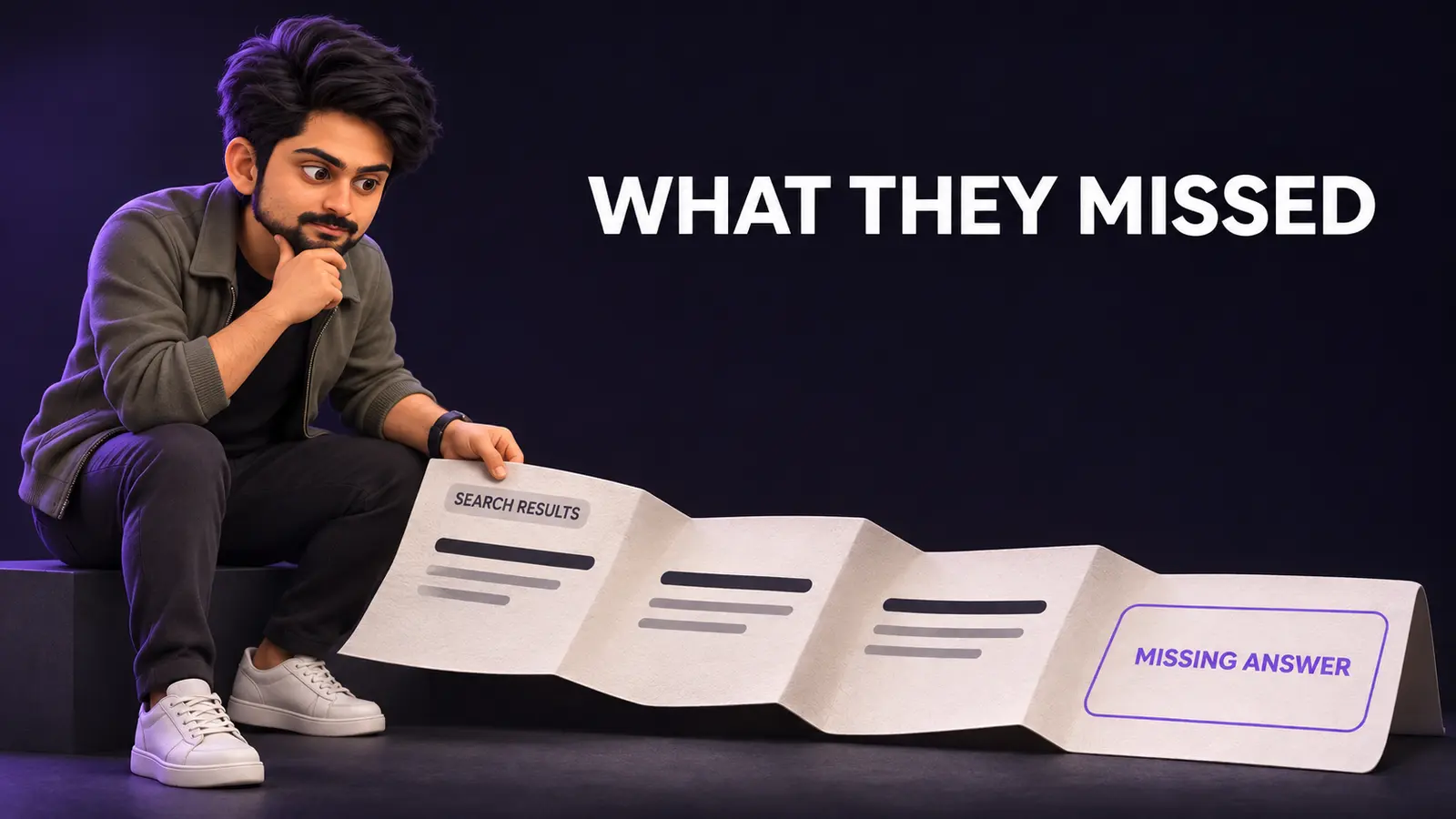
The more interesting opportunity is finding what their content doesn’t explain, even when they rank well. That is where a proper SEO content gap analysis becomes more than another keyword spreadsheet.
Here is how I approach it, from identifying opportunities to deciding what deserves a new page.
What Is SEO Content Gap Analysis?
SEO content gap analysis compares your content with search demand, competing pages, and audience questions to identify missing topics, incomplete explanations, and mismatched search intent.
I look for four types of gaps:
-
Keyword gaps: Competitors rank for relevant searches that your site does not.
-
Depth gaps: Existing articles mention a topic but fail to explain important details.
-
Intent gaps: A page answers an informational question when the searcher actually needs a comparison, tutorial, or buying decision.
-
Experience gaps: Existing content repeats generic advice without examples or original evidence.
A keyword gap tells you where to investigate. It does not automatically tell you what to publish.
1. Find Your Actual Search Competitors
Your biggest business competitor is not necessarily your biggest SEO competitor.
Imagine you sell Shopify loyalty software. Your search results could be dominated by guides, agencies, and software comparison websites rather than competing apps.
Search five to ten buyer questions and note recurring domains. Shortlist three to five websites competing for the same audience and intent.
Compare relevant sections or individual pages when possible.
2. Use Keyword Gap Tools to Build a Starting List
Tools like Ahrefs Content Gap and Semrush Keyword Gap can compare your domain with competitors and identify missing or weaker rankings.
My first filters would be:
-
Remove competitor brand names and unrelated topics.
-
Group similar keywords by intent rather than treating each variation as a new article.
-
Check which competitor URLs actually rank, not just the keyword list.
-
Look beyond search volume. A low-volume question can still influence a valuable purchase.
This is a shortlist for investigation, not a publishing calendar.
3. Look for Opportunities Hiding in Search Console
I would also check Google Search Console’s Performance report. It shows the queries and pages already receiving impressions, clicks, and rankings.
Look for relevant impressions but few clicks, and important pages ranking below leading results. Average position is directional, so inspect the search results too.
Sometimes the page exists but lacks a useful subsection, clear answer, or the right intent.
Before editing, I would follow the same principle I use in my SEO audit checklist: understand what is working and what is holding the page back.
Search Console reveals opportunities tied to existing visibility, something third-party estimates cannot replace.
4. Read the Ranking Pages and Find What They Avoid
This is the step I consider most valuable, and it cannot be completed by exporting a CSV.
Open the top five relevant results for a promising query. Then ask:
-
Do they answer the main question quickly?
-
What important follow-up question is missing?
-
Are the examples current and specific?
-
Do they explain costs, limitations, trade-offs, or implementation steps?
-
Are readers forced to visit another website to finish the task?
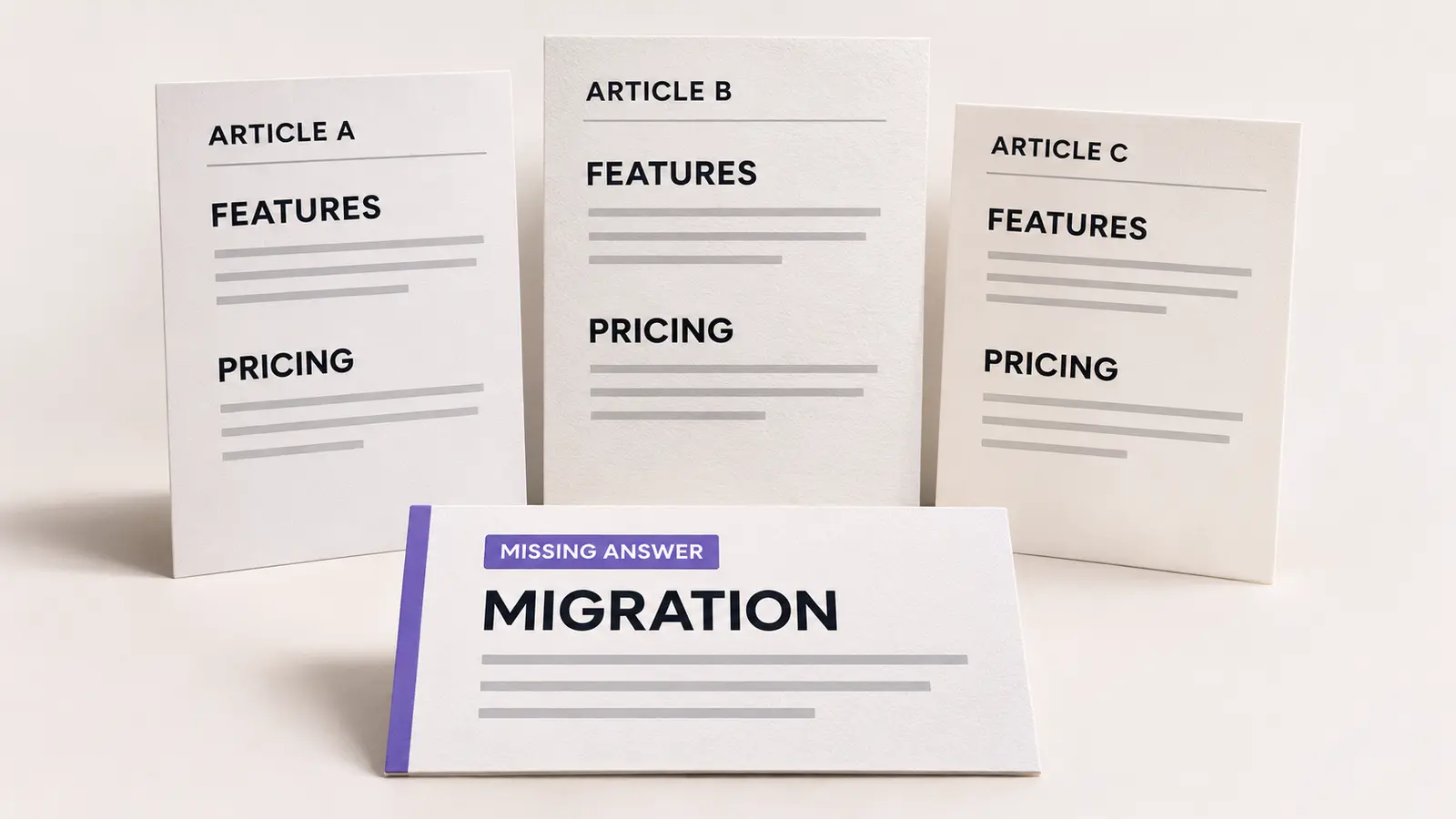
For example, suppose several articles explain the benefits of migrating to a new email marketing platform. But none clearly explains what happens to existing customer segments, automation history, or consent settings.
That is a potential content gap. A real migration checklist could be more useful than another generic comparison. Validate demand and accuracy first.
I like recording these findings in a simple sheet: Search question | Existing answer | Missing detail | Content action.
5. Find Questions Competitors Do Not Think to Target
Keyword tools cannot capture every question customers ask before deciding.
Look at support tickets, sales conversations, product reviews, community discussions, Reddit, Quora, and Google’s related questions. Notice the language people use when they are confused, comparing options, or trying to solve a problem.
Validate the opportunity in search results and check whether it is a recurring need.
The most valuable idea may not be a keyword with impressive search volume. It may be a specific problem that your product or expertise can explain better than anyone else.
6. Decide Whether to Update a Page or Create One
Finding a gap does not mean you need another URL.
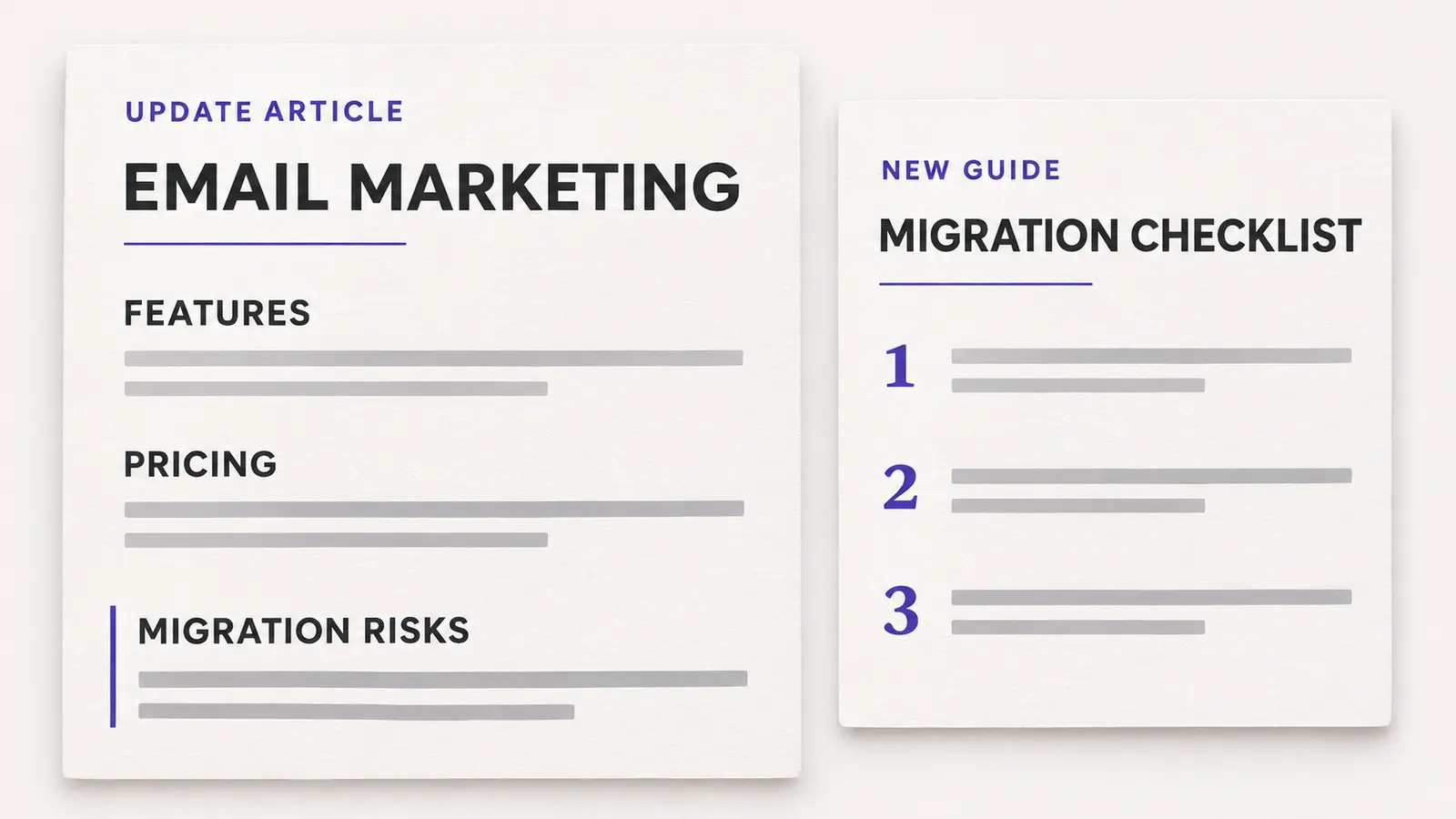
If the missing detail belongs naturally inside an existing guide, update that guide. If it represents a separate search intent that deserves a complete answer, create a new page.
For example, an article about Shopify email marketing might need a short section on migration risks. But a full step-by-step migration guide may deserve its own page.
Check your content inventory first. Two pages targeting the same intent may compete or confuse readers.
Once the content is ready, connect it to related pages using descriptive internal links. If discovery or indexing is a concern, my technical SEO guide for WordPress covers the foundations.
7. Prioritize Gaps by Business Value, Not Just Volume
I would score each opportunity against four questions:
-
Relevance: Does our target audience genuinely need this answer?
-
Business value: Could the topic influence a meaningful action or decision?
-
Competitive weakness: Is there clear evidence that existing results leave something unanswered?
-
Ability to deliver: Can we add credible examples, evidence, or experience that others lack?
A topic with modest demand and strong business relevance can be more valuable than a broad keyword attracting visitors who will never need your service.
Consider effort. A product-tested comparison takes work, perhaps why competitors avoided it.
What Changes With AI Search in 2026?
AI Overviews and AI Mode can combine information across related questions, increasing the importance of detailed, original answers.
Google’s guidance for generative AI search emphasizes unique, useful content and established SEO practices, not special shortcuts. In 2026, Search Console also introduced dedicated generative AI visibility reports showing impressions and appearing pages, although those reports do not provide a complete map of the questions users asked.
I discussed the broader shift in SEO vs GEO: What Businesses Need to Optimize for Now. My view is that the opportunity is still to answer real questions better, wherever people discover the answer.
Common Content Gap Analysis Mistakes
-
Copying competitors’ topic lists: You end up publishing the same articles, only later.
-
Creating a page for every keyword variation: This produces thin, overlapping content instead of useful topic coverage.
-
Ignoring commercial intent: Traffic potential looks attractive, but the audience may be irrelevant.
-
Publishing without checking the SERP: The content format may not match what searchers want.
-
Measuring rankings alone: Track qualified visits, engagement, enquiries, and conversions where possible.
Frequently Asked Questions
What is the difference between keyword gap analysis and content gap analysis?
Keyword gap analysis finds searches where competing websites rank and yours does not. Content gap analysis goes further by evaluating missing topics, incomplete answers, search intent, and the usefulness of existing pages.
Can I perform SEO content gap analysis for free?
Yes. Start with Google Search Console, manual searches, competitor websites, and customer questions. Paid tools speed up keyword comparisons, but they are not essential for identifying weak or incomplete answers.
How often should I perform a content gap analysis?
Review opportunities when planning new content, after important product or market changes, and during periodic content audits. Fast-moving topics may need more frequent attention than evergreen guides.
Should I create a new blog post for every content gap?
No. Update an existing page when the missing information serves the same intent. Create a separate page only when the question needs a distinct, substantial answer.
How do I know whether a content gap is worth targeting?
Look for audience relevance, evidence of demand, weak existing answers, business value, and your ability to contribute something original. Search volume alone is not enough.
Final Thoughts
I think the biggest mistake in competitor research is assuming every keyword they rank for is something you should chase.
Sometimes the better opportunity is sitting inside the pages already ranking: the missing explanation, unanswered objection, outdated example, or practical detail nobody bothered to include.
Find those gaps. Answer them properly. Then measure whether they help the right people find you.