One of the most common questions I hear when discussing a new website is:
Should we build it with WordPress or go completely custom?
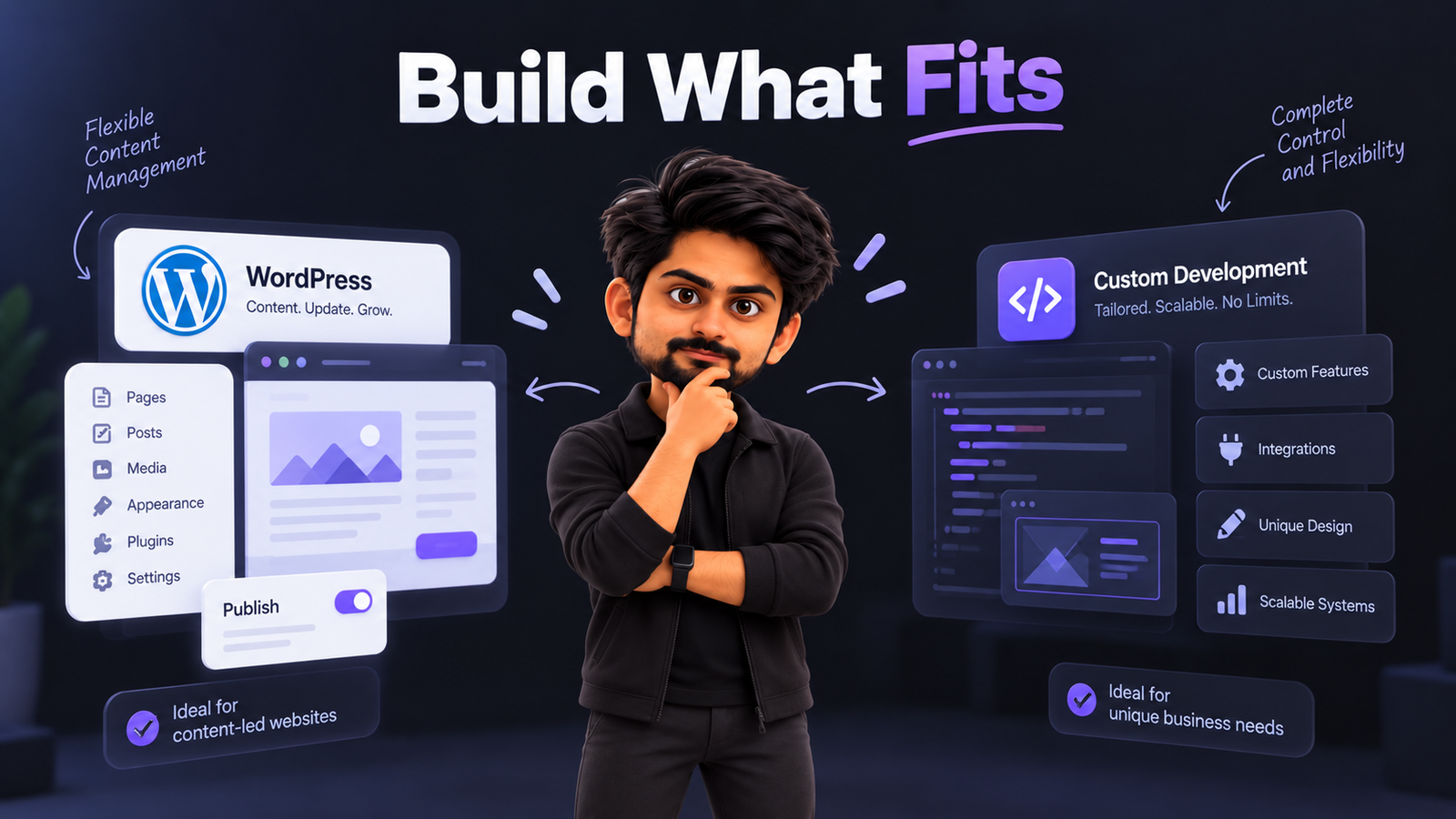
For me, WordPress vs custom development is not really a platform debate.
I do not automatically recommend WordPress because it is easier. And I do not recommend custom development just because it sounds more advanced.
I first look at what the business is trying to achieve.
Because the wrong technology can make a simple website unnecessarily expensive, while the wrong CMS can make a complex business difficult to scale later.
After working on websites for years, I have learned to decide based on the business first and the technology second.
What WordPress vs Custom Development Actually Means
WordPress gives you an established content management system.
You already have a backend for pages, blogs, users, media, SEO management, plugins, integrations, and many other common website requirements.
Custom development gives you much more control over how the website or application is structured.
That could mean building a custom frontend, backend, database structure, API integrations, dashboard, or an entire web application around the exact requirements of the business.
But custom development does not mean that every line of code needs to be written from scratch.
Modern custom websites still use frameworks, libraries, APIs, cloud services, and existing development tools.
The difference is mainly how much of the system is designed specifically for the business.
WordPress Is Still Very Relevant in 2026
I sometimes hear people talk about WordPress as if it is an old technology that businesses should move away from.
I do not see it that way.
As of September 2026, W3Techs reports that WordPress is used by about 40.2% of all websites and holds around 58.8% of the CMS market among websites where the CMS is known.
The platform itself is also continuing to evolve.
WordPress 7.1, released in August 2026, introduced stronger responsive styling controls, improved media editing, better collaboration tools, and further performance improvements.
So for me, the question is not whether WordPress is modern enough.
The question is whether it fits the project.
When I Usually Choose WordPress
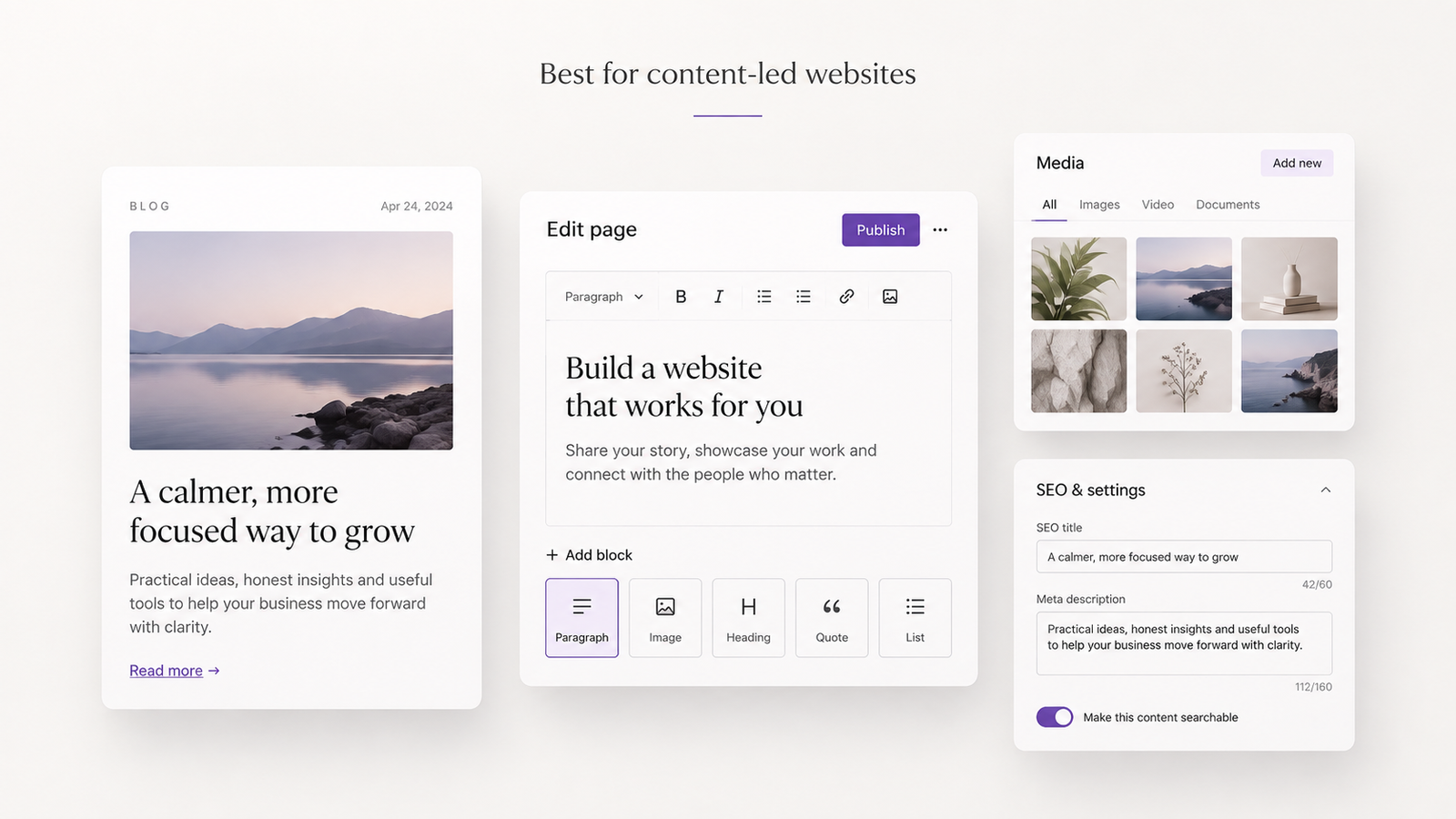
If I am building a website where the main purpose is marketing, content, lead generation, search visibility, or presenting a business online, WordPress is usually one of the first options I consider.
This can include company websites, service businesses, blogs, content-heavy websites, landing pages, and many standard e-commerce requirements.
One major reason is content management.
A marketing team should not need a developer every time they want to update a headline, publish an article, change an image, or create a new landing page.
WordPress already solves that problem well.
It can also reduce unnecessary development time because common functionality does not need to be rebuilt.
That allows more time and budget to go into the things customers actually see: strategy, UX, messaging, design, SEO, conversion, and performance.
When I Prefer Custom Development
There is a point where forcing everything into WordPress starts creating more problems than it solves.
If the website is actually becoming a software product, platform, operational system, or highly interactive application, I start looking seriously at custom development.
For example, a business may need complex dashboards, custom account systems, advanced user permissions, proprietary workflows, real-time functionality, unusual database relationships, or deep integrations with several external systems.
You can technically make WordPress do many of these things.
But “technically possible” is not always the same as “good architecture.”
If I need ten plugins, several workarounds, and a large amount of custom code just to make the core business process work, I would rather question whether WordPress should be there at all.
I Do Not Choose Based on Speed Alone
A common argument in the WordPress vs custom development discussion is that custom websites are always faster.
I do not agree with that as a general rule.
A badly built custom website can be slow.
A badly configured WordPress website can also be slow.
Performance depends heavily on architecture, hosting, code quality, caching, images, scripts, third-party tools, database usage, and how the frontend is built.
The same applies to SEO.
Google does not give a website better rankings simply because it was custom coded.
A WordPress website and a custom website can both have strong technical SEO, structured data, clean internal linking, optimized content, fast loading times, and good user experience.
The implementation matters more than the label attached to the technology.
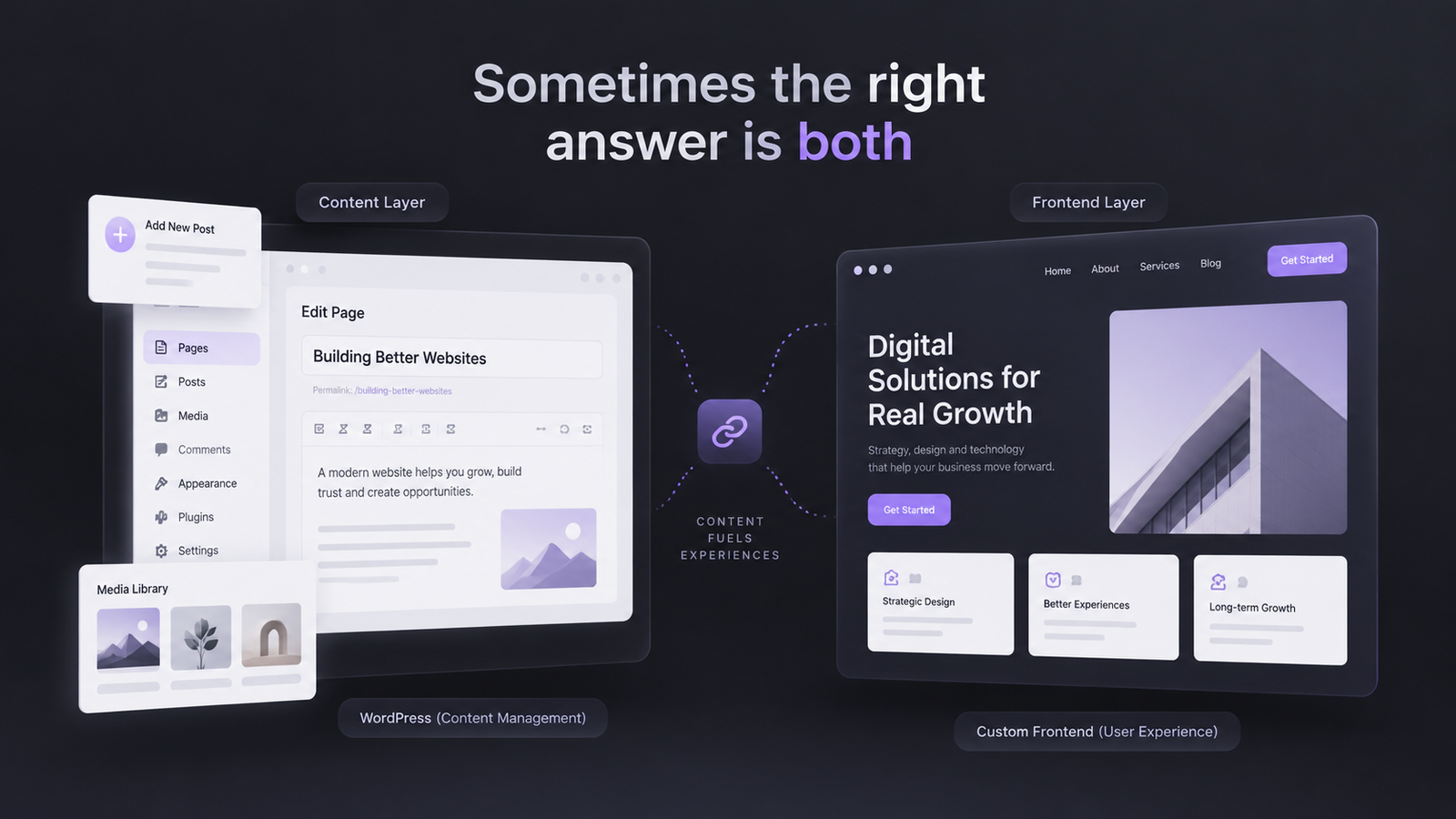
Sometimes I Use Both
The choice does not always have to be WordPress or custom development.
There is also a middle ground.
WordPress can handle content while a completely custom frontend handles the user experience.
WordPress officially provides a REST API that allows its content and data to be used by external applications and custom interfaces.
This type of headless or hybrid architecture can make sense when a business wants the familiar WordPress content workflow but needs more flexibility on the frontend.
I would not use this architecture just because it sounds modern, though.
It adds development and maintenance complexity, so the business should have a real reason for needing it.
The Questions I Ask Before Choosing
Before deciding between the two, I normally think through a few practical questions:
- What does the website need to do today, and what might it need to do in the next few years?
- How often will the internal team update content?
- Does the business require unique workflows or functionality?
- What external systems need to connect with the website?
- How much technical maintenance can the business realistically handle?
- Is the website mainly a marketing asset, or is the website itself part of the product?
These questions usually make the technology decision much clearer.
My Simple Rule
My general thinking is simple.
If the website mainly exists to market the business, publish content, generate leads, support SEO, or handle relatively standard online transactions, I usually explore WordPress first.
If the website itself is becoming software, contains unique business logic, or needs highly specialized functionality, custom development starts making more sense.
And sometimes the right answer is a combination of both.
Final Thoughts on WordPress vs Custom Development
There is no universal winner in WordPress vs custom development.
The better option is the one that gives the business enough flexibility without creating unnecessary complexity.
I would rather build a well-planned WordPress website that solves the business problem properly than build a custom system simply because custom development sounds more impressive.
And I would rather recommend custom development than force a growing product into WordPress when the architecture clearly needs something different.
The technology should support the business.
The business should never have to adapt itself around the technology.
If you are planning a new website and are unsure which direction makes sense, this is exactly the kind of decision I help businesses work through before development begins.
Frequently Asked Questions
Is WordPress better than custom development?
Neither is automatically better. WordPress works well for many business websites, content-heavy sites, blogs, and marketing websites. Custom development makes more sense when a business needs unique functionality, workflows, dashboards, or software-like features.
Is custom development more expensive than WordPress?
Usually, yes. Custom development often requires more planning, development time, testing, and ongoing technical maintenance. WordPress can reduce development time by using an existing CMS and established tools, but the final cost still depends on the complexity of the project.
Is WordPress good for large business websites?
Yes, WordPress can work well for large websites when it is properly planned, developed, hosted, and maintained. The decision should depend on the website’s functionality and architecture rather than company size alone.
Is a custom website faster than WordPress?
Not necessarily. Website speed depends on the quality of the development, hosting, scripts, images, database usage, caching, and overall architecture. Both WordPress and custom websites can perform very well when built correctly.
When should I choose custom development instead of WordPress?
I usually consider custom development when the website needs complex user accounts, unique business logic, custom dashboards, advanced integrations, real-time functionality, or features that would require too many WordPress plugins and workarounds.
Can WordPress and custom development be used together?
Yes. WordPress can be used as the content management system while a custom frontend or application handles the user experience. This can be useful for certain projects, but I only recommend it when the additional complexity has a clear business reason.