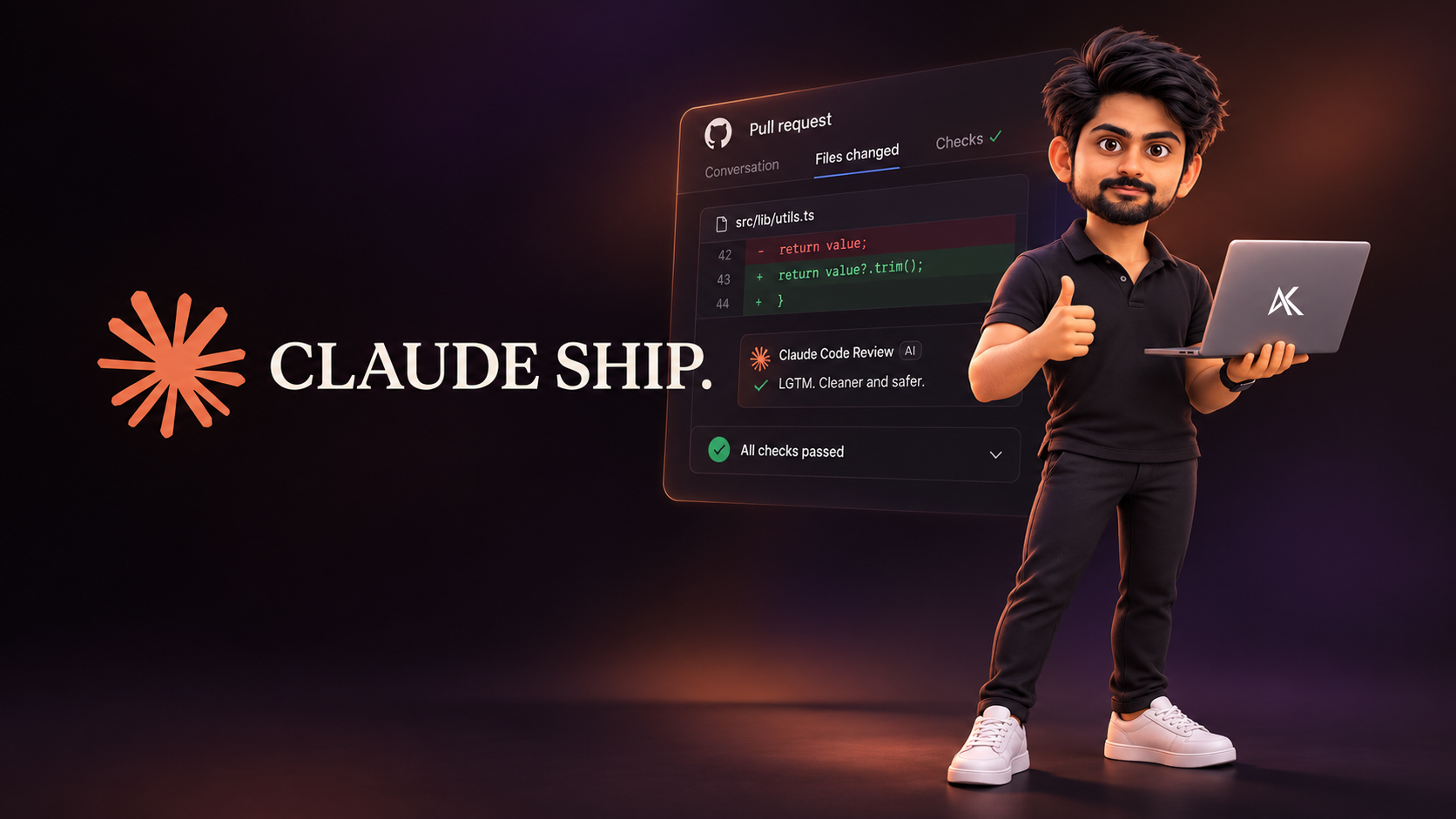
Over the last few hours, I’ve been using Claude Ship, shipping quite a bit of code, working with pull requests and exploring what Anthropic’s latest addition to Claude Code can actually do.
And it is genuinely impressive.
We see a lot of AI product launches these days. Companies claim all sorts of things, and when you actually start using their products, the experience is sometimes completely different.
But with Claude Ship, my experience has been remarkably close to what Anthropic claims.
On November 23, 2026, Anthropic officially introduced Claude Ship. And for someone like me who has spent over a decade in web development, this is a particularly interesting development.
Let me explain why.
What Exactly Is Claude Ship?
Claude Ship is a collection of AI agents that can review code, fix issues, respond to pull request feedback and approve changes based on predefined policies.
Until now, most AI coding tools have focused on helping developers write code. Claude Ship focuses on what happens afterwards.
Writing code, creating pull requests, reviewing changes, fixing issues, running checks and getting everything ready to merge can now become a much more connected workflow.
And the best part? You don’t necessarily have to manage every single step yourself.
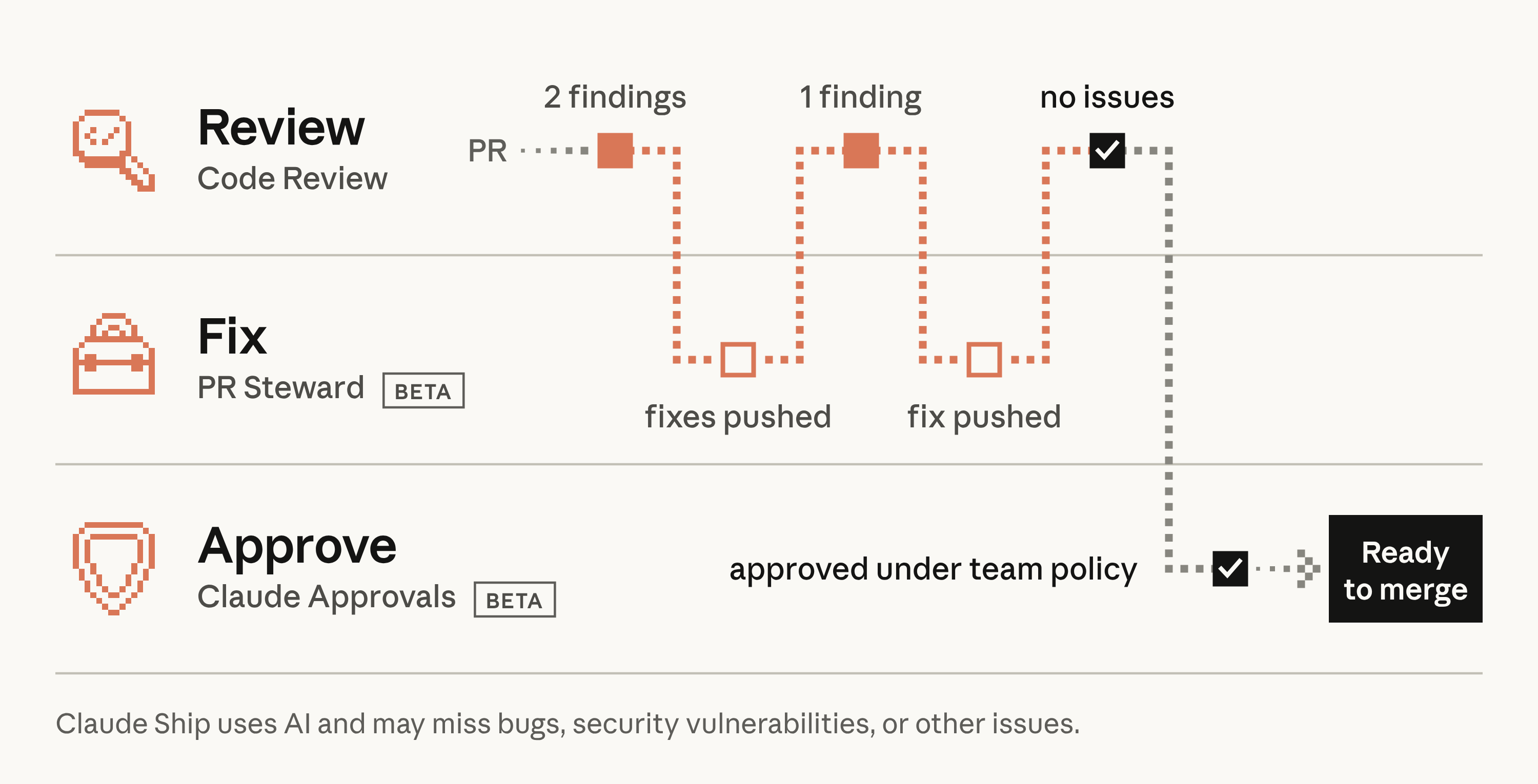
Anthropic explains the entire workflow in its official Claude Ship announcement.
How Does Claude Ship Work?
Claude Ship consists of three main components.
1. Code Review
Claude reviews your code changes against the existing codebase, looking for potential bugs, security vulnerabilities, logical errors and overlooked edge cases.
Teams can choose between Quick, Standard and Deep review levels depending on their requirements.
What makes this useful is that Claude considers the surrounding codebase rather than simply reviewing an isolated piece of code.
2. PR Steward
This is where things get really interesting.
Most code review tools tell you what is wrong. You still need to go back, understand the feedback, fix the issue and push another commit.
PR Steward can handle that work.
It can respond to failed CI checks, resolve merge conflicts, address review comments and push fixes to your branch.
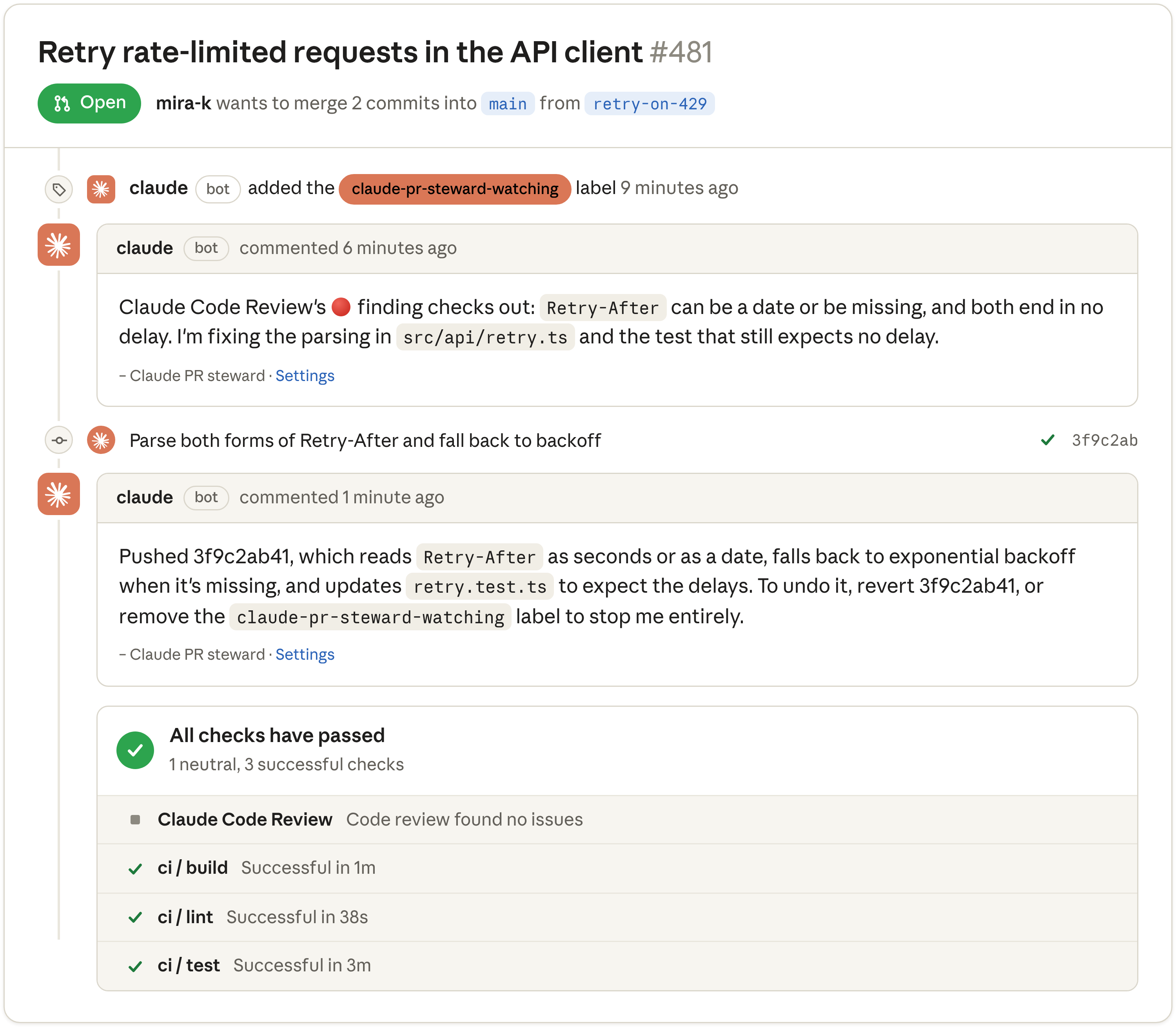
It also explains the changes it makes and how to revert them.
However, PR Steward itself is not designed to approve or merge pull requests.
3. Claude Approvals
Claude Approvals allows development teams to define rules regarding which changes AI can approve and which require human intervention.
For example, you could allow Claude to approve documentation changes or minor UI improvements while requiring human approval for authentication and payment-related changes.
Your team defines the boundaries, and Claude operates within them.
My Experience Using Claude Ship
I’ve already used Claude Ship to ship a considerable amount of code and work through multiple pull requests.
And what I particularly like about it is how much of the repetitive development work it can take off my hands.
As someone who manages businesses, works on multiple projects and still actively involves myself in development, constantly switching between tasks is not exactly ideal.
Writing code is one thing. Going back to the same code repeatedly because of reviews, failed checks or additional changes is another.
Claude Ship addresses that problem quite effectively.
The capabilities Anthropic talks about in its announcement are not just interesting concepts. Based on what I’ve used so far, they translate well into actual development workflows.
And that matters to me far more than another AI benchmark or carefully prepared product demonstration.
I want AI tools that I can integrate into my everyday work. Claude Ship feels like one of those tools.
The /ship Command Is Probably My Favourite Addition
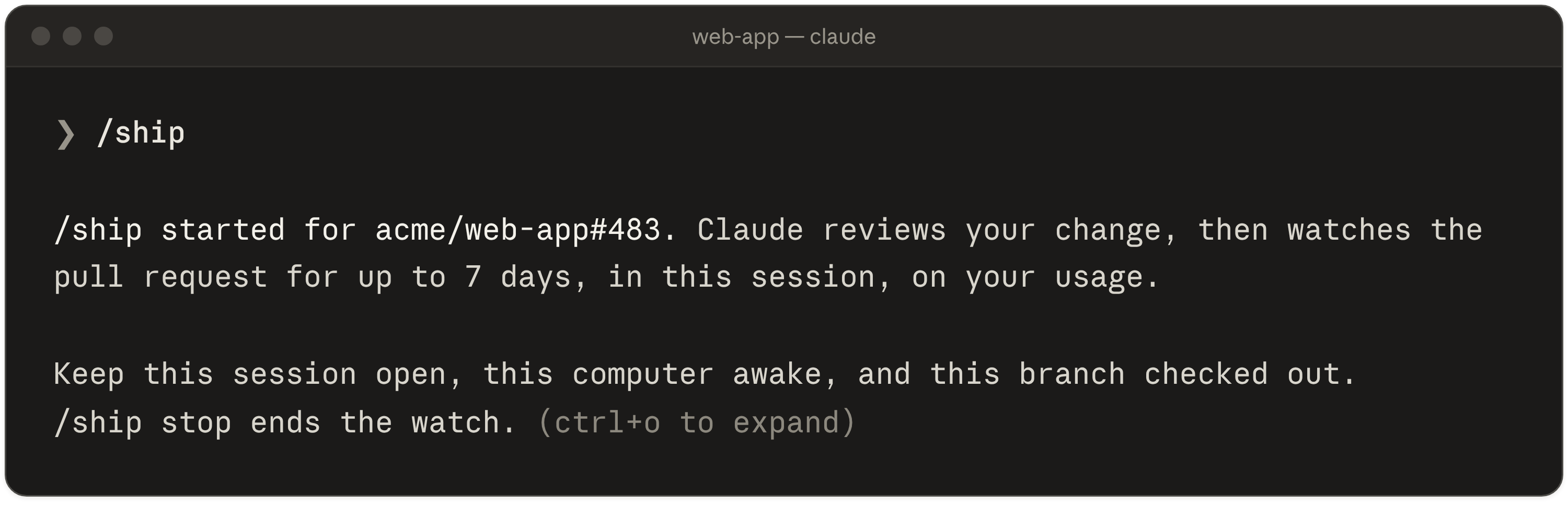
If you already use Claude Code, getting started can be as simple as running:
/ship
Once your changes are ready, Claude can create a pull request, review your changes, monitor feedback, address issues and help get everything ready to merge.
For an existing pull request where you don’t need another initial review, you can also use /steward.
There are some prerequisites, including an updated Claude Code installation and appropriate GitHub permissions. You can find those in the official documentation.
One thing to remember is that the local /ship workflow still leaves the merge decision to you, subject to your repository configuration.
But think about how much of the work leading up to that decision can now be handled by AI.
That’s a pretty significant improvement.
Writing Code Is No Longer the Biggest Challenge
In my previous article, Vibe Coding is Really Good But…, I talked about why understanding code still matters, even when AI can generate it for you.
And I still stand by that.
But something interesting is happening now.
AI has made it possible to generate code much faster than we could a few years ago. Naturally, that also means we have more code to review, test and maintain.
According to Anthropic’s engineering team, merged pull requests in the Claude Code codebase more than doubled between June and September 2026, while the proportion of reverted pull requests decreased by over 40%.
These are internal results from Anthropic’s broader engineering workflow, but they highlight an important shift.
The bottleneck in software development is gradually moving from writing code to verifying it.
And Claude Ship is addressing exactly that.
Would I Trust Claude Ship With Everything?
No. And I don’t think you should either.
Just because I am impressed with a product doesn’t mean I’m going to blindly trust it with every aspect of a production application.
For critical changes involving security, databases, payments or sensitive customer information, I would still want proper human oversight.
Even Anthropic acknowledges that Claude Ship can miss bugs and security vulnerabilities.
But that doesn’t make it any less useful.
The idea should be to delegate repetitive work to AI while retaining control over important engineering decisions.
Claude Ship Pricing and Availability
As of November 26, 2026, the repository-level Claude Ship agents are available for Claude Team and Enterprise customers.
Code Review is generally available, while PR Steward and Claude Approvals are currently in beta.
These organizational agents are billed based on token consumption, separately from the usage included in your subscription.
The /ship and /steward commands run within Claude Code sessions and count towards your regular usage.
For me, the more important question is how much productive time these tools save compared to what they cost.
My Final Thoughts on Claude Ship
In my recent article about Claude Fable 5.2 and Mythos 5.2, I discussed how AI is moving beyond answering questions and towards completing actual work.
Claude Ship is another example of that.
I am particularly excited about this because I’ve already experienced its usefulness in my own development workflow.
We are gradually moving from asking AI to write a piece of code to letting AI handle much larger parts of the software development lifecycle.
Will developers become irrelevant? I don’t think so.
Understanding architecture, business requirements, security and the consequences of technical decisions will become even more important.
But spending hours managing repetitive development tasks? I can definitely see that becoming less necessary.
And as someone who loves building things, I am quite excited to see where this goes.
Anyway, until next time. Stay Strong and Keep Learning.
Amar Karthik